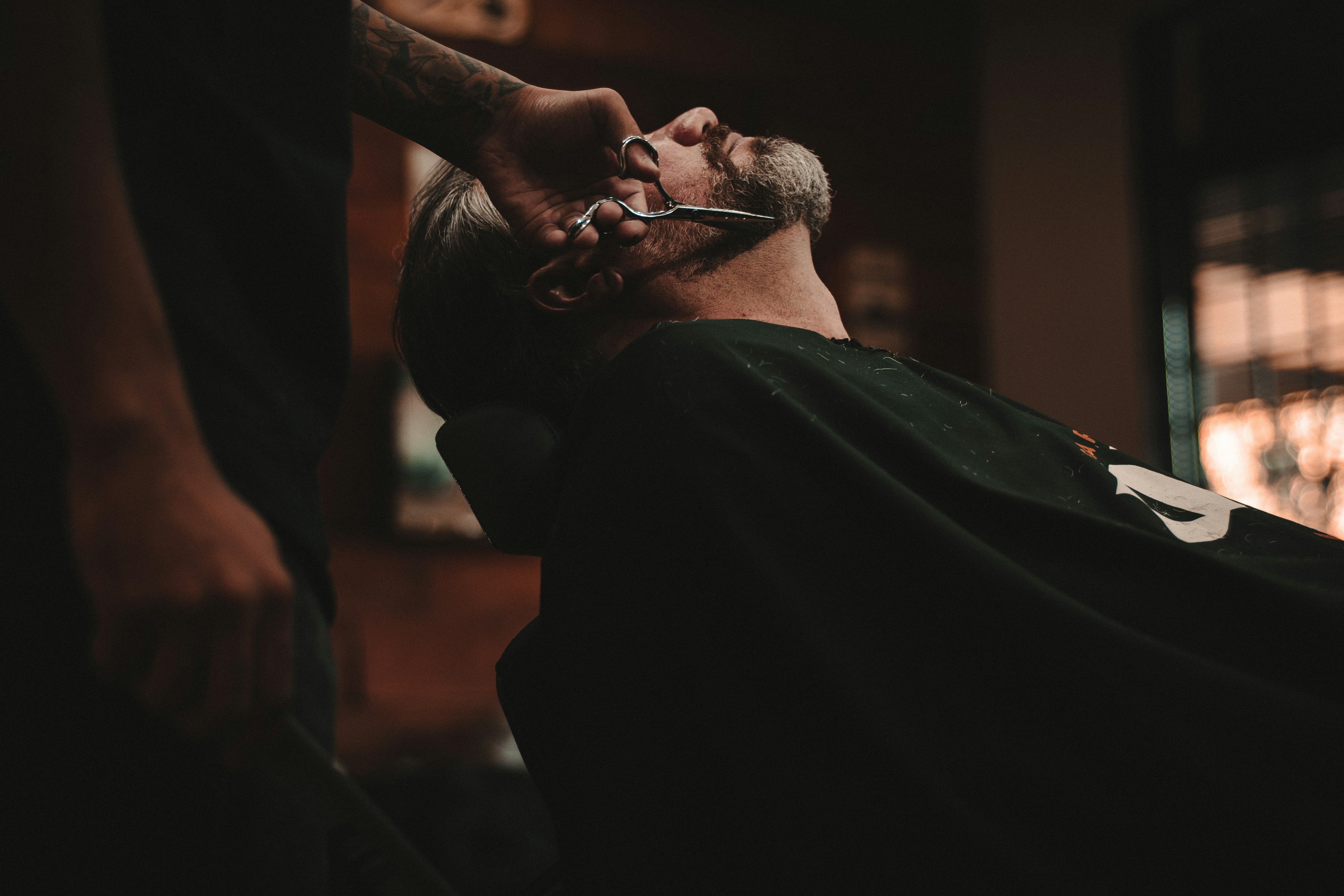
A client sits down and asks for "a tidy-up". Twenty minutes later they look in the mirror and something is off, but neither of you can say what. Nine times out of ten the shape was never defined in the first place. A beard is built from three lines — the cheek line, the jaw line and the neckline — and everything else is blending between them.
Key takeaways
- A beard has three defining lines: cheek, jaw and neck. Define them before you blend.
- Draw each line with a trimmer on dry hair before any clipper work.
- Set the neckline about two fingers above the Adam's apple, curved toward the ears.
- Work in natural or side light — overhead salon lighting hides the jaw line.
Why beards look uneven
Most "uneven" beards are not a clipper problem. They are a missing-lines problem. Without a defined cheek and neckline, the eye has nothing to read, so any small variation in length looks like a mistake. Define the lines first and the blend has a frame to sit inside.
The three lines that define a beard
The cheek line
The cheek line runs from the sideburn down toward the moustache, following the natural growth. Take it too high and the beard floats; too low and it looks heavy. Follow the hairline, not a ruler.
The jaw line
The jaw line is the shadow that separates beard from skin along the bottom of the jaw. It is not a hard edge — it is the transition you blend toward.
The neckline
The neckline is the most common mistake. Too high and the beard looks like it is floating above the neck; too low and it swallows the collar. Set it just above the Adam's apple and curve it up toward the ears.
How to map a beard, step by step
- Comb the beard out and let it dry fully.
- Find the cheek line and mark it with a trimmer, working down toward the moustache.
- Set the neckline two fingers above the Adam's apple, curving up toward each ear.
- Connect the cheek and neck lines with the jaw line.
- Only now pick up the clipper and blend between the lines.
How high should the neckline be?
A good rule of thumb is two fingers above the Adam's apple, angled up toward the ears. On a longer beard, leave a little more length below the jaw so the shape reads full from the side. On a short beard, keep the line crisp.
Work in natural light
Overhead salon lighting flattens the jaw line and hides the shadow you are trying to follow. Turn the client slightly toward a window or a side light so you can see the natural line you are shaping.
Beard design is a full module in our Beard Sculpting program and it supports every cut in Classic Barbering. Want to master it? Enrol here or talk to admissions.
Frequently asked questions
Should I trim a beard wet or dry?
Dry. Beard hair stretches when wet and springs back as it dries, so a wet trim usually ends up shorter than intended.
How often should a beard be reshaped?
Every two to four weeks for most clients. The cheek and neck lines grow out fastest and are the first to look untidy.
What if the client has a patchy beard?
Map the lines around the strongest growth and let the patchy areas fill in or stay shorter. Defining lines makes a patchy beard look intentional rather than thin.